
Why Would a Swimming Pool Turn Green?
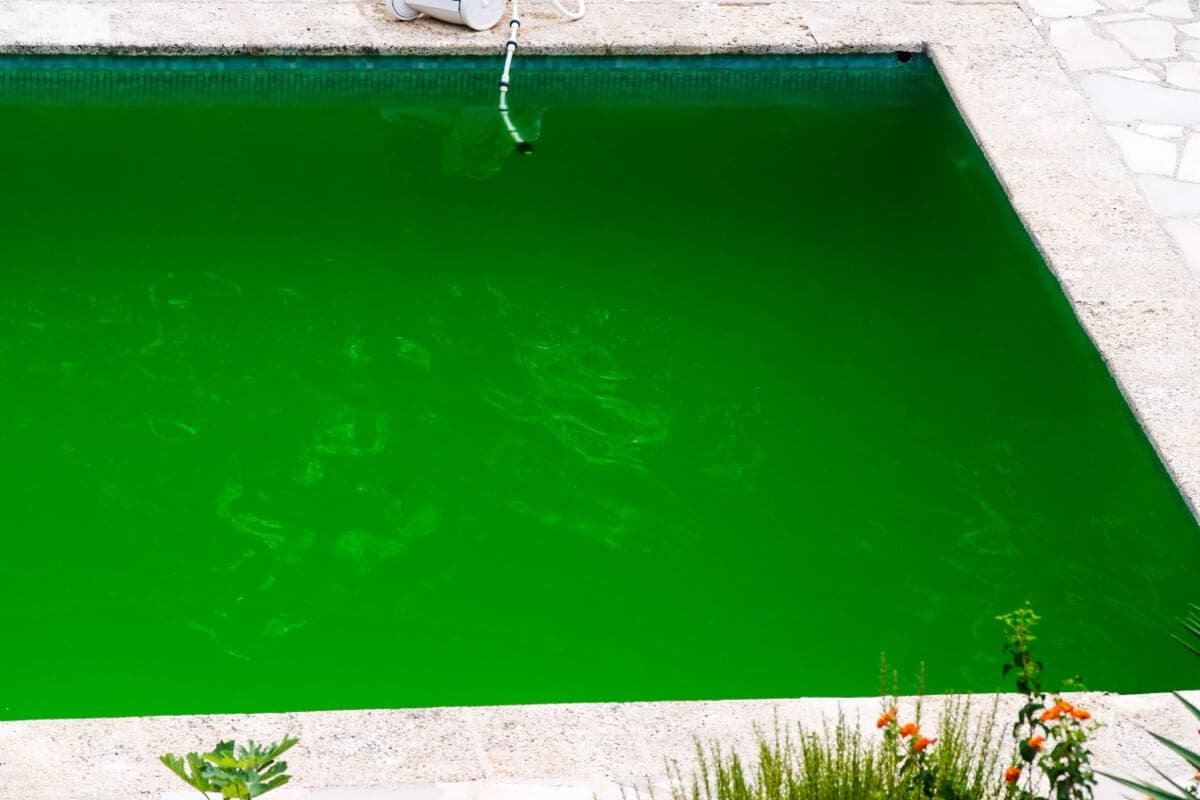
Seeing your swimming pool turn green can be frustrating and alarming, especially if the water was clear just days before. Green pool water is one of the most common pool problems and usually signals that something is off with sanitation, filtration, or water balance.
In most cases, green water means algae has started to grow. This can happen quickly when chlorine levels drop, circulation is poor, or environmental factors like heat and rain overwhelm the system.
The good news is that a green pool is usually fixable. In this guide, we will explain why swimming pools turn green, what causes it, and what steps you can take to clear the water and prevent it from happening again.
What Does Green Pool Water Mean?
Green pool water usually means that algae is present in the water. Algae are microscopic organisms that thrive in warm, untreated, or poorly filtered water and can multiply very quickly.
The shade of green can vary. Light green water often indicates early algae growth, while darker or murky green water usually means the algae problem is more advanced.
In some cases, green water may also be caused by metals like copper reacting with chemicals, but this is less common. In most residential pools, green water is a clear sign that sanitation or filtration is not working as it should.
The Most Common Reason Pools Turn Green: Algae
Algae is the number one reason swimming pools turn green. When chlorine levels drop or become ineffective, algae can begin to grow and spread rapidly throughout the water.
Algae thrives in warm temperatures, stagnant water, and pools that are not properly sanitized. Once it starts growing, it can coat pool surfaces and turn the water green in a short amount of time.
Without quick treatment, algae can become harder to remove and may lead to cloudy water, slippery surfaces, and increased chemical demand. This is why early detection and prompt action are important.
Low or Ineffective Chlorine Levels
Chlorine is what keeps pool water clean and clear by killing bacteria and algae. When chlorine levels are too low, algae can grow quickly and turn the water green.
Sometimes chlorine is present but not working effectively. High pH levels, old chlorine, or too much stabilizer (cyanuric acid) can reduce chlorine’s ability to sanitize the water, even if test results show chlorine in range.
Sunlight can also break down chlorine if stabilizer levels are too low. When chlorine cannot do its job properly, algae takes advantage and spreads throughout the pool.
Poor Filtration and Circulation
Proper filtration and circulation are essential for keeping pool water clear. If the filter is dirty, worn, or not running long enough each day, debris and algae spores remain in the water.
Poor circulation creates dead spots where water does not move well, allowing algae to grow. Corners, steps, and areas behind ladders are common trouble spots.
Even with proper chemical levels, a pool can turn green if the filtration system is not effectively removing contaminants. Running the pump long enough and keeping the filter clean helps prevent algae from taking hold.
Imbalanced Water Chemistry
Water chemistry plays a major role in keeping a pool clear. When pH, alkalinity, or calcium levels are out of balance, chlorine becomes less effective at killing algae and bacteria.
High pH is a common issue and can weaken chlorine’s sanitizing power, even if chlorine levels appear normal on a test strip. Low alkalinity can cause pH to swing rapidly, making it harder to maintain stable water conditions.
When water chemistry is not properly balanced, algae can grow more easily and the pool can turn green faster. Regular testing and small adjustments help keep sanitizers working as they should.
Environmental Factors That Turn Pools Green
Environmental conditions can quickly push a pool toward turning green, even if maintenance is usually consistent. Heavy rain can dilute chlorine levels and introduce debris, dirt, and contaminants into the water.
Hot weather and direct sunlight increase chlorine demand and create ideal conditions for algae growth. Nearby trees, pollen, dust, and lawn runoff can also add nutrients that algae feeds on.
Periods of heavy swimmer use can overwhelm the pool’s sanitation system as well. Without quick adjustments to filtration and chemical levels, these factors can lead to green water in a short time.
Can It Be Safe to Swim in a Green Pool?
In most cases, it is not safe to swim in a green pool. Green water usually means algae is present, and algae often goes hand in hand with poor sanitation and reduced chlorine effectiveness.
Green water also reduces visibility, making it harder to see the pool floor or any hazards beneath the surface. This increases the risk of accidents, especially in deeper areas.
Even if the pool does not look severely green, it is best to avoid swimming until the water is clear and properly balanced. Treating the problem first helps protect swimmers’ health and prevents the issue from getting worse.
How to Fix a Green Pool
Fixing a green pool starts with testing the water to check chlorine levels, pH, and alkalinity. Adjusting these levels first helps chlorine work more effectively during treatment.
Next, shock the pool to kill algae and bacteria. This involves adding a higher dose of chlorine than normal. Follow product instructions carefully and keep swimmers out of the pool during this process.
After shocking, brush the pool walls and floor to loosen algae, then run the filter continuously to remove dead algae and debris. Clean or backwash the filter as needed. With proper treatment and filtration, most green pools begin to clear within a few days.
How to Prevent a Pool From Turning Green
Preventing green pool water starts with consistent chlorine maintenance. Keep sanitizer levels in the proper range and adjust quickly after heavy rain, hot weather, or heavy pool use.
Run the pool pump long enough each day to ensure good circulation, and clean or backwash the filter regularly so debris and algae spores are removed before they can grow.
Test your pool water frequently and correct small imbalances before they become bigger problems. Regular brushing, skimming, and debris removal also help reduce the nutrients algae needs to survive.
With steady maintenance and quick adjustments, most green pool problems can be avoided entirely.